
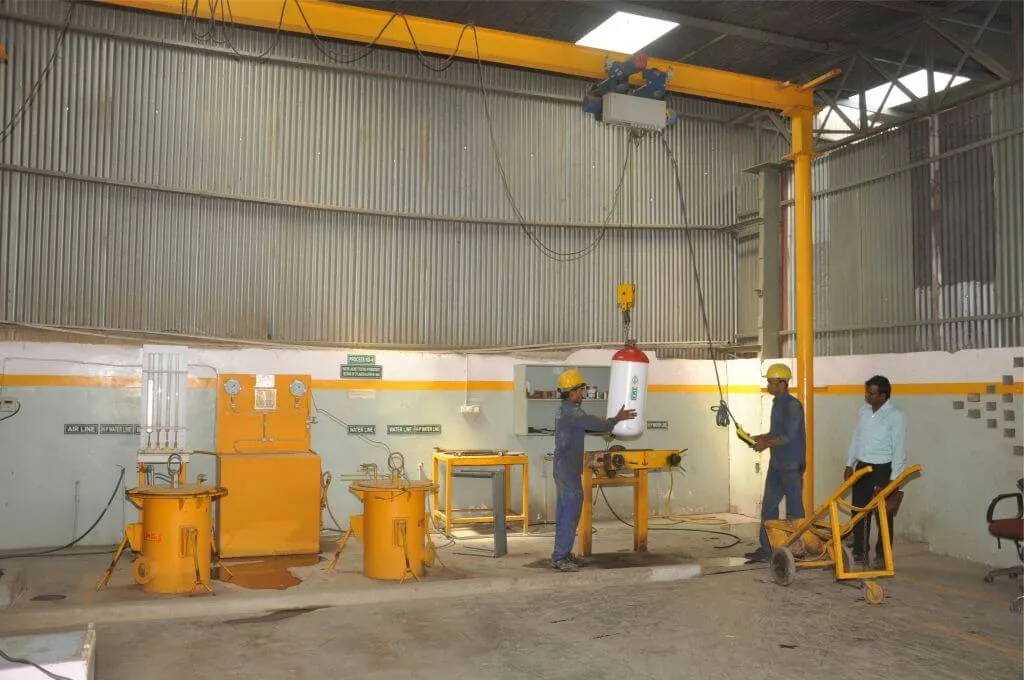
Hydrostatic testing, often called hydro-testing, is a non-destructive test that checks a cylinder for leaks, structural flaws, strength and durability. In short, it shows how a cylinder will behave under extreme pressure, before it’s trusted with that pressure in real use.
How the test works
The cylinder is filled with water, which barely compresses, and pressurised. Technicians then look for leaks and measure any permanent change in the cylinder’s shape. A cylinder that stretches and doesn’t spring back has failed.
Why it matters
High-pressure cylinders with even a small structural fault can rupture under pressure and cause serious harm. Periodic testing catches those faults while the cylinder is safely out of service.
Our safety procedures
Hydro-testing involves high pressure, so every test follows strict rules:
- A risk assessment is done before work starts, and a safety work permit is issued.
- Technicians wear protective equipment for their eyes and ears.
- Only calibrated pressure gauges and relief valves are used, rated correctly for the test pressure.
- A pressure relief valve protects against over-pressure.
- The test area is barricaded and signposted to keep unauthorised people out.
- A supervisor is present for every test.